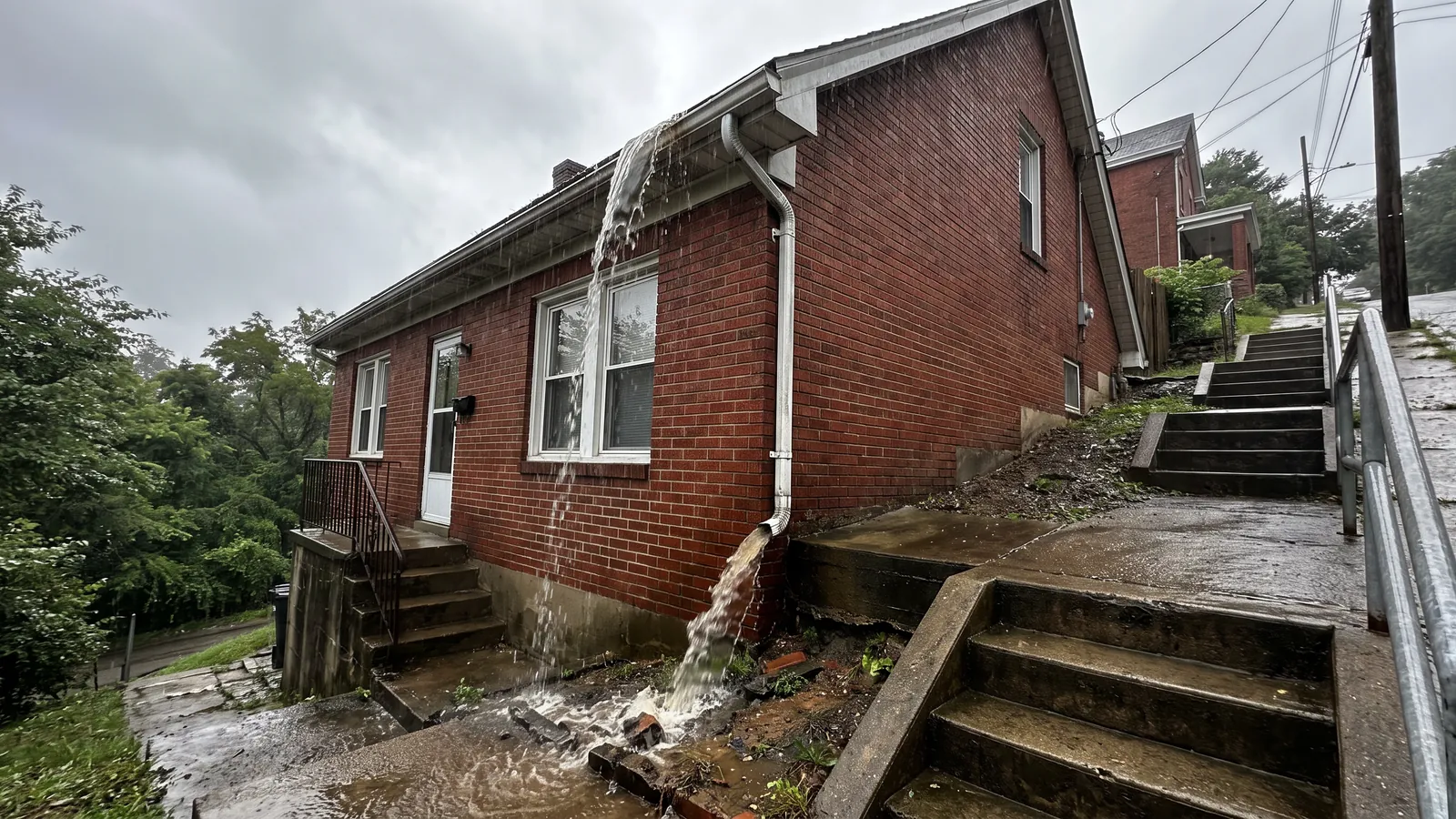
Step one: trace the water
Look at where water appears and when. Each pattern points to a different source.
- At the base of the walls, all around: water rising through the cove joint where the wall meets the footing, pushed by saturated soil.
- Along a single line on the wall: a crack.
- Dark patches and white crust on block: water moving through the hollow block cores.
- In one corner after rain: almost always a downspout or a low spot in the yard outside that corner.
- Around a window: a window well filling with water.
- Through the middle of the floor: groundwater from below, often seen in spring.
- Only on humid summer days, on cold pipes and walls: condensation, a dehumidifier issue rather than a leak.
Step two: fix the outside water first
Clean the gutters. Extend downspouts well away from the house, farther on a slope. Make sure soil, walks and patios fall away from the foundation. Add covers or drains to window wells. These steps cost little and on their own fix a surprising number of Pittsburgh basements.
Step three: choose a system if you still need one
Interior drainage
A drain under the edge of the floor, a membrane on the lower wall and a sump. It handles the cove joint, porous walls and floor seepage together, installed from inside. Best for most older city and suburban basements, including stone. See interior drainage.
Exterior waterproofing
Digging to the footing, repairing the wall, applying a membrane and drainage board, and laying a footing drain. Stops water at the outside face of the wall. Best when the wall needs outside repair anyway, the yard is accessible, and you want the wall itself kept dry.
Crack injection
For poured walls where a crack is the only path. Quick, inexpensive and done from inside. See crack repair.
Outdoor French drains
A gravel trench with a perforated pipe that catches water in the yard before it reaches the house. Useful on slopes and where water runs in from uphill.
Step four: plan for the pump
Most systems end at a sump pump. Size it for the inflow, add a battery backup, and carry the discharge well away from the house so the water does not return.
What does not work
Waterproof paints and coatings on the inside of a wall cannot hold back real water pressure from outside; they peel. Patching cracks with hydraulic cement from the inside often moves the leak a few inches over. And a dehumidifier helps with damp air but will not stop liquid water.
Questions people ask
Is a wet basement normal for an old Pittsburgh house?
It is common, but it is fixable. Even old stone basements can be kept dry with drainage and a sump.
Do I need to waterproof before finishing a basement?
Yes, if there is any sign of water. Finishing over a damp wall traps moisture and leads to mold and ruined drywall.
What is the difference between a French drain and drain tile?
Both are perforated pipe in gravel. A French drain is usually outdoors in the yard; drain tile runs along the footing, inside or outside the basement.
How do I know my sump pump is working?
Pour a bucket of water into the basin. The pump should switch on, empty it, and switch off without a struggle.
Keep reading: Waterproofing cost · Basement waterproofing service · Sump pumps