Foundation crack repair that starts by asking why it cracked
Some cracks are harmless shrinkage from the day the wall was poured. Others are the first sign that soil pressure or settling is moving the wall. The fix depends on which one you have, so that is the first thing we work out.
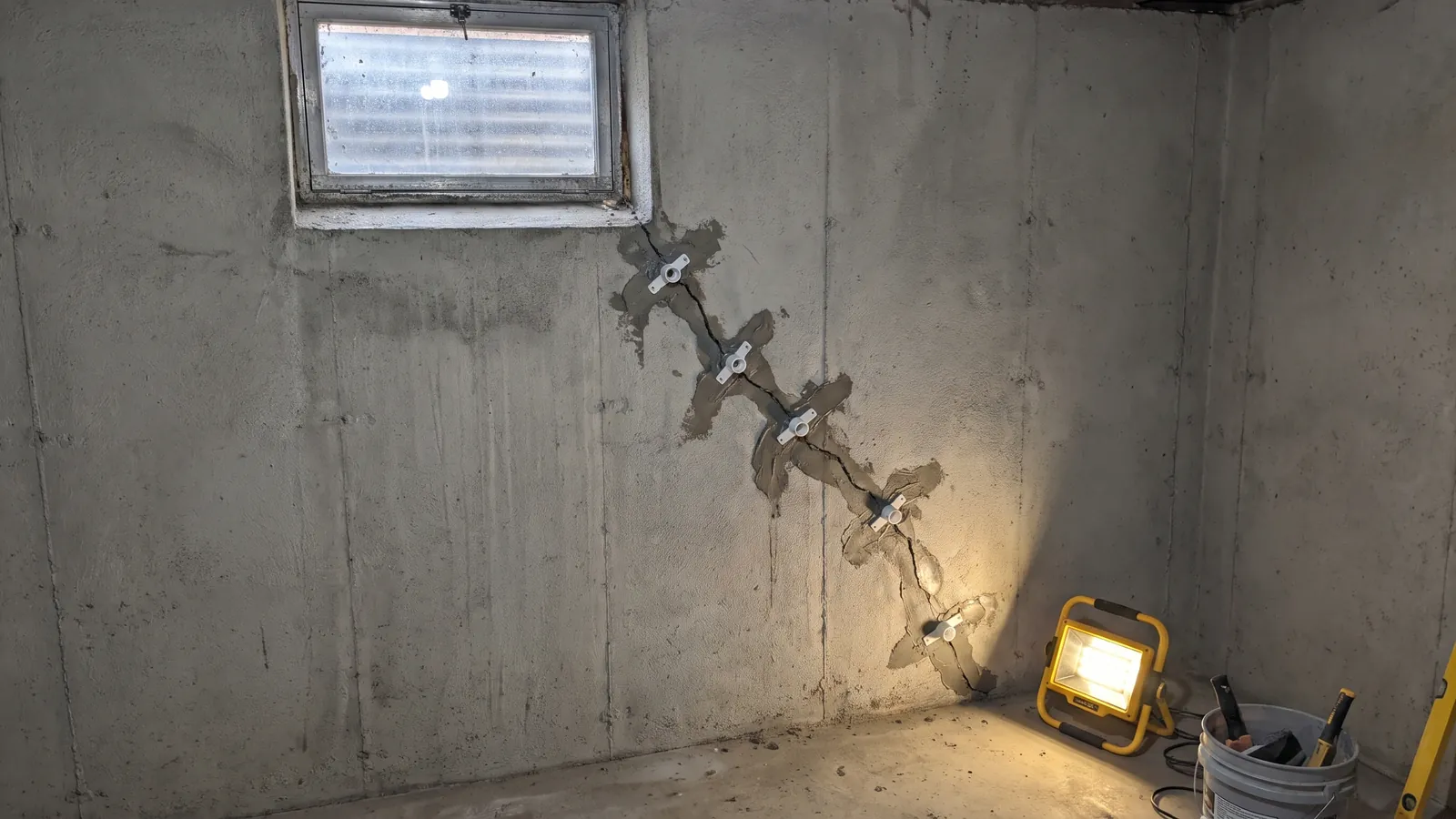
Concrete shrinks as it cures, so most poured basement walls in the Pittsburgh area have a crack or two that showed up within the first few years. They tend to be thin, roughly vertical, and the same width from top to bottom. On their own they are not a structural problem, but in this soil they are a water problem: clay holds moisture against the wall, and every spring thaw pushes water through any gap it can find.
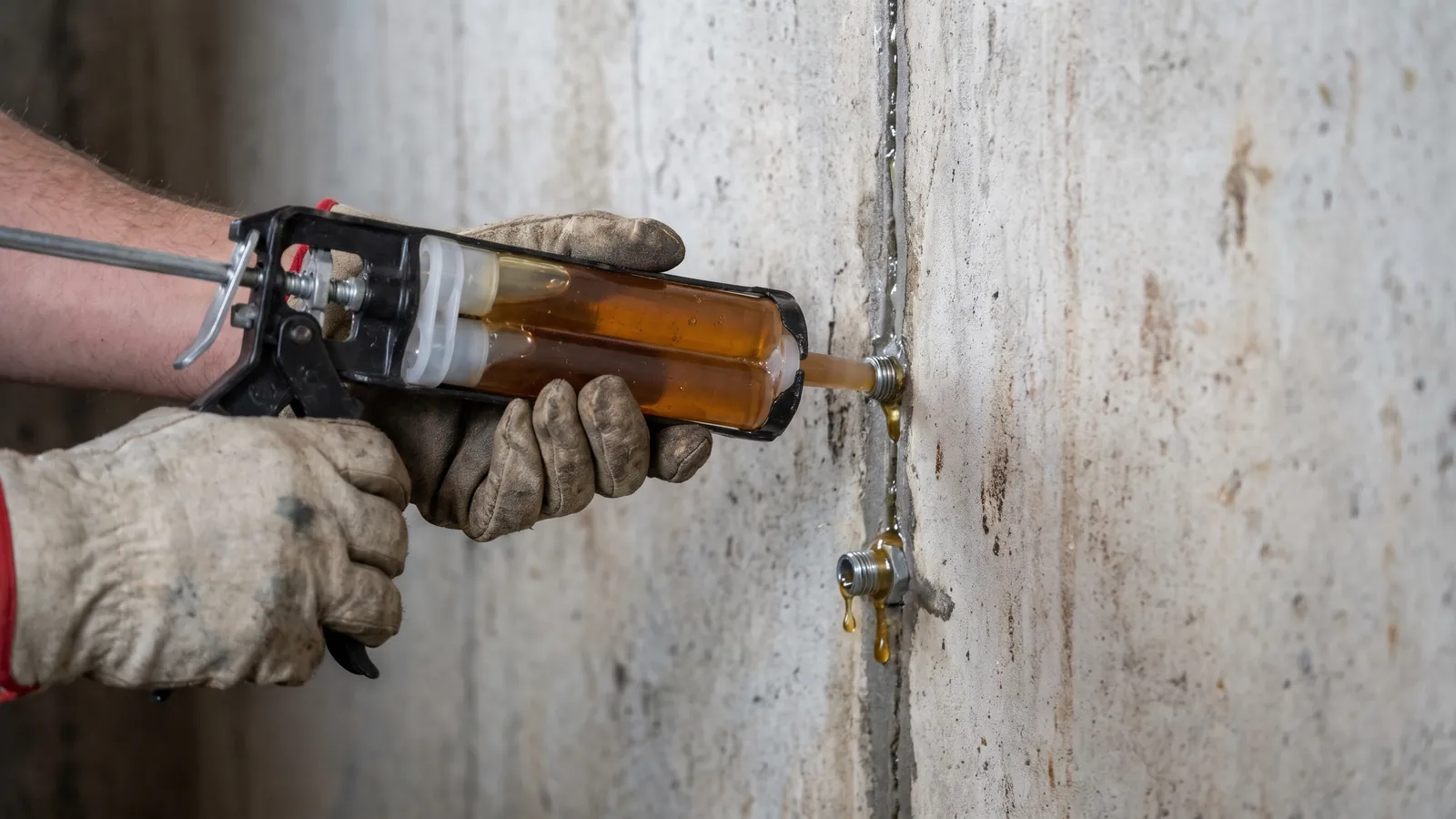
For those cracks we use injection. Small ports are glued along the crack, the surface is sealed, and resin is pumped in from the bottom port up until it fills the crack through the full thickness of the wall. Flexible polyurethane is our usual choice for leaking cracks because it foams into the gaps and moves a little with the wall. Rigid epoxy is used when the crack needs to be bonded back together as well as sealed. Either way, the repair is done from inside the basement, with no digging.
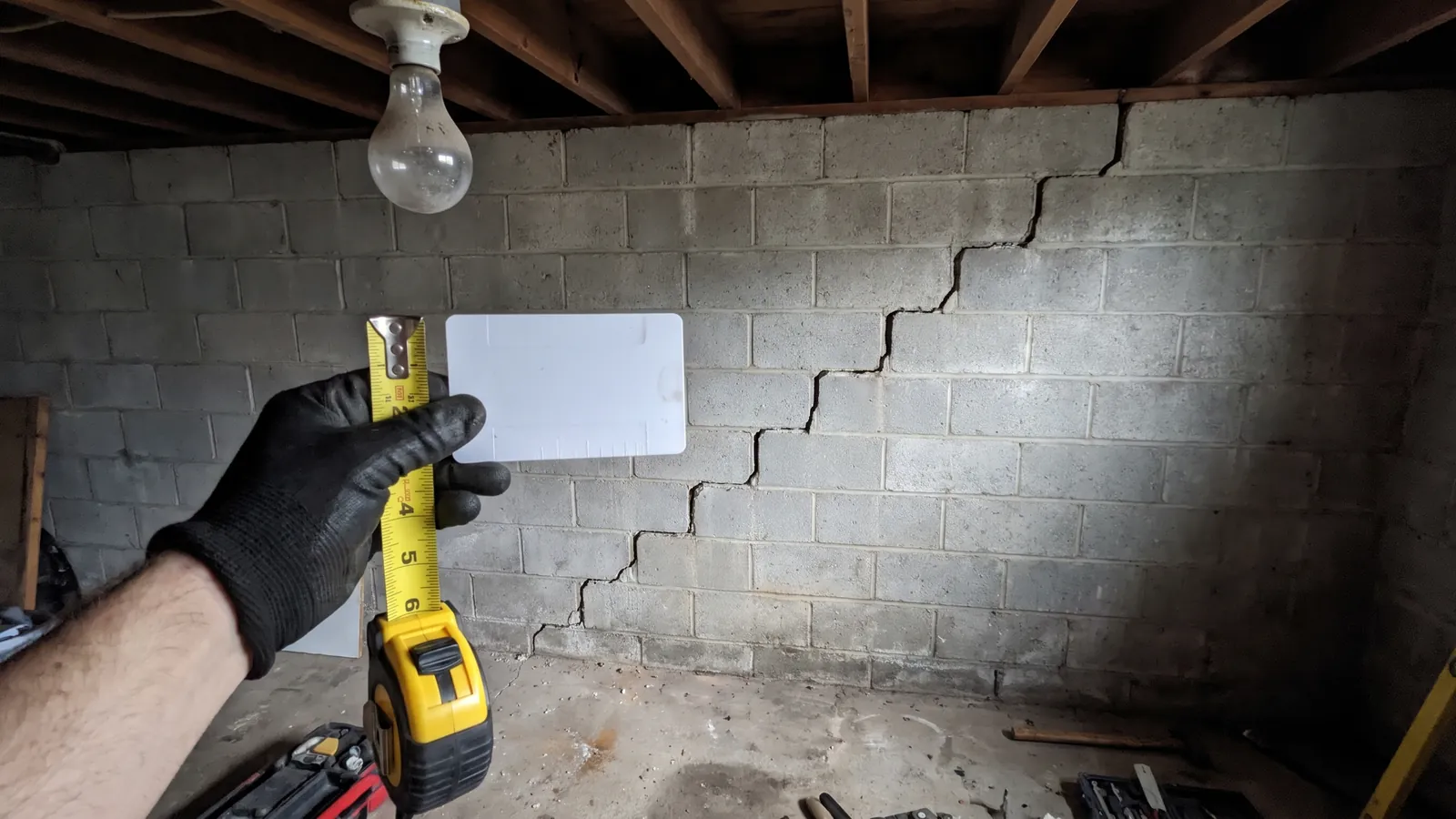
Other cracks tell a different story. A horizontal crack in a block wall, usually three or four courses below the top, means soil is pushing the wall in. A stair-step crack through mortar joints near a corner often means that corner is settling. A crack that is wider at the top than the bottom, or one that keeps reopening after being patched, means something is still moving. Sealing those alone would only hide the evidence. They need the cause addressed, with wall bracing or piers, and then the crack is closed up.
Old Pittsburgh houses add a third type: stone and rubble foundations with mortar that has turned to sand after a century of damp. Those get repointed and, where water is the issue, paired with drainage rather than injected.
What the job includes
Crack mapped and measured
Width, direction and length logged, with gauge marks where we want to see whether it is still moving.
Cause identified
Shrinkage, settling, soil pressure or water. The answer decides the repair.
Full-depth injection
Resin pushed through the whole wall from the inside, not a surface smear that peels in a year.
Block and stone walls
Mortar cracks repointed and the movement behind them dealt with first.
Clean finish
Ports removed and the surface ground smooth enough to paint or finish over.
Follow-up checks
We tell you what to look for after the next thaw, and we come back if it weeps.
Foundation crack repair cost in Pittsburgh
| Job | Typical range | What moves it |
|---|---|---|
| Polyurethane injection, one crack up to 8 ft | $450 – $950 | Length, wall thickness and access |
| Epoxy structural injection, one crack | $550 – $1,100 | When the crack must be bonded shut |
| Additional cracks, same visit | $300 – $700 each | Cheaper once the crew is set up |
| Repointing a stone or block wall section | $900 – $2,800 | Area and mortar condition |
| Exterior crack seal with excavation | $2,000 – $4,500 | Depth, slope and what is in the way |
Typical 2026 ranges for Pittsburgh-area houses, to help you plan. Your price comes after the free inspection, itemized and in writing, and the work starts only when you agree to it.
On the job
Questions about foundation crack repair
Will a crack repair stop water coming in?
For a poured wall where the crack itself is the leak, yes: a proper injection fills the crack through the whole wall and stops seepage there. If water is also coming in at the floor joint or through the block, the crack repair is only part of the answer, and we will say so.
Can I just fill the crack with caulk or hydraulic cement?
You can, and it may look fine for a while. Surface patches seal only the inside face, so water still travels through the wall and pushes the patch off, usually the next spring. They also hide whether the crack is still widening.
How long does crack injection take?
Most single cracks are done in two to three hours. The resin sets the same day and you can finish or paint the wall once the ports are removed.
Is a horizontal crack an emergency?
Not usually an emergency, but it is not one to wait years on. It means the wall is being pushed in. Have it inspected soon, and call right away if the wall is visibly bulging or the crack is opening fast.
Do you repair cracks in old stone foundations?
Yes. Stone walls get repointed with suitable mortar rather than injected, and because they are rarely watertight, we usually pair that work with drainage inside.
Does homeowners insurance pay for foundation cracks?
Usually not when the cause is settling, shrinkage or soil pressure, since policies tend to exclude gradual movement. It can be different after a sudden event. Ask your agent, and we can give you photos and a written description of what we found.