Newer homes on old farm ground in Plum
Plum went from farms to subdivisions over a few decades. Houses built on graded, filled lots can settle differently from those on undisturbed ground, sometimes years after closing.
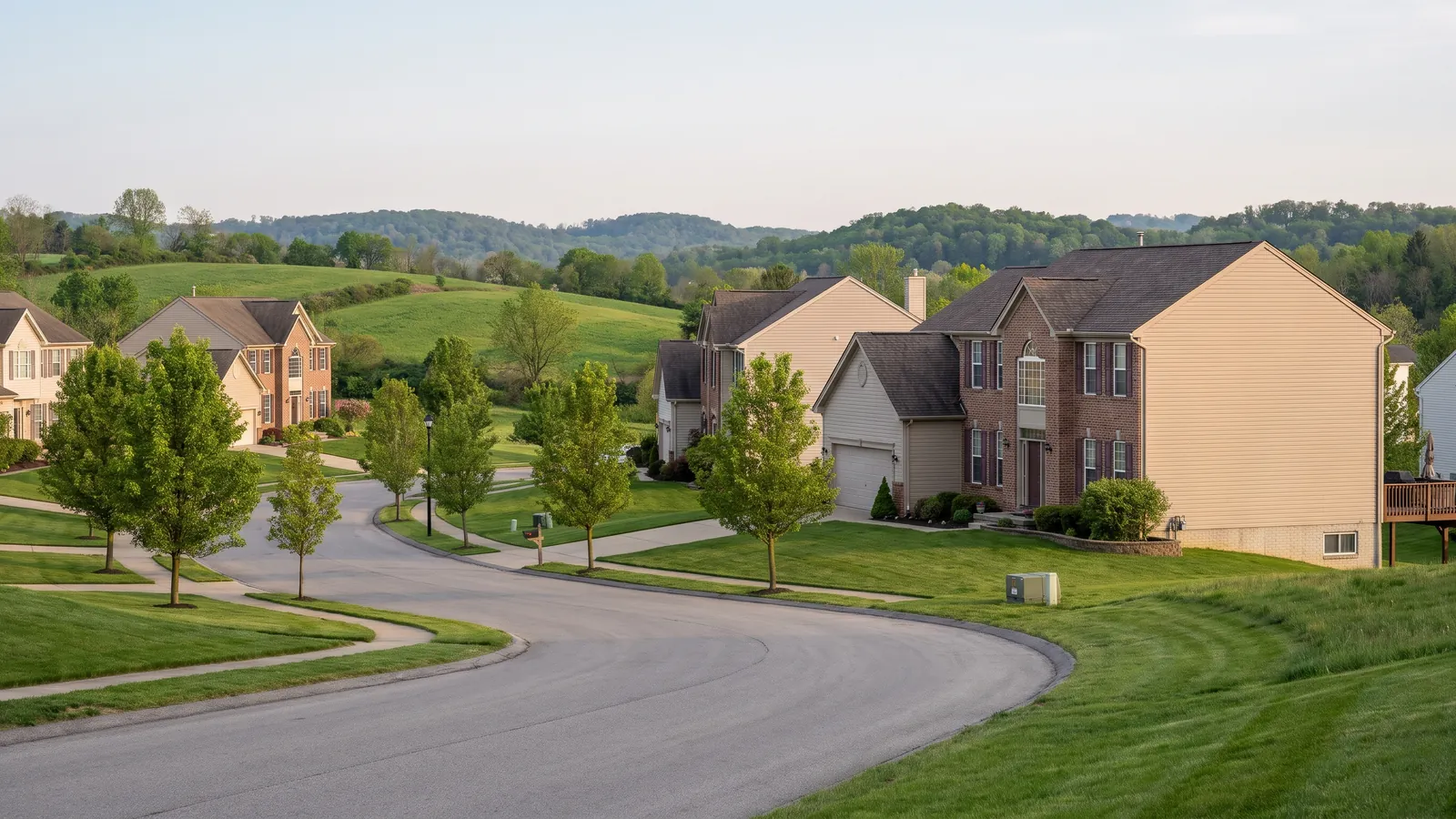
Plum is a borough of about 27,000 people on the eastern edge of Allegheny County, with older homes near its river and road corridors and many 1990s and 2000s subdivisions on rolling former farmland. Building those subdivisions meant cutting and filling the hills to create level lots, and fill soil does not always behave like the native ground beside it.
That is why Plum calls tend to be different from city calls. Instead of old stone walls, we see poured foundations with a crack that showed up after the first few winters, a corner that has settled more than the rest of the house where the lot was built up, a patio or walk that sank, and sump pumps that run far more than the builder expected. Some of these are minor. Some, especially active settling on fill, call for piers to reach firmer soil.
Our inspection pays attention to where your lot was cut and where it was filled, which often explains which corner of the house is moving.
What we see most in Plum
Settling on fill
One corner dropping where the lot was built up during grading.
Early poured-wall cracks
Cracks appearing in the first decade, often leaking in spring.
Busy sump pumps
Pumps cycling constantly in wet seasons, with no backup.
Sinking patios and walks
Slabs on the same loose fill as the house.
Parts of Plum we cover
- Route 286 (Golden Mile Highway) corridor
- New Texas Road
- Holiday Park
- Renton
- Logans Ferry Road
- Center New Texas area
- Unity area
- Oakmont side
Services for Plum homes
- Crack repair, bowing walls and settling, with piers where the footing needs firmer ground
- Basement waterproofing, interior drains and sump pumps
- Crawl space repair, slab leveling and a free foundation inspection
Plum questions
My house is only twenty years old. Why is it settling?
Newer houses on filled lots can settle as the fill compacts, especially where it was not compacted well. It often shows within the first fifteen to twenty years.
Is a crack in a newer poured wall normal?
Thin vertical shrinkage cracks are common. Ones that widen, shift or leak should be looked at.
Can a patio be lifted instead of replaced?
Usually yes, with foam or mudjacking, as long as it is not badly broken.
Nearby: Penn Hills · Monroeville · Murrysville · all areas