The low space under the house matters more than its height suggests
Many Pittsburgh houses and additions sit partly or fully over a crawl space. Damp earth floors, open vents and sagging beams down there show up upstairs as musty air, cold floors and bounce.
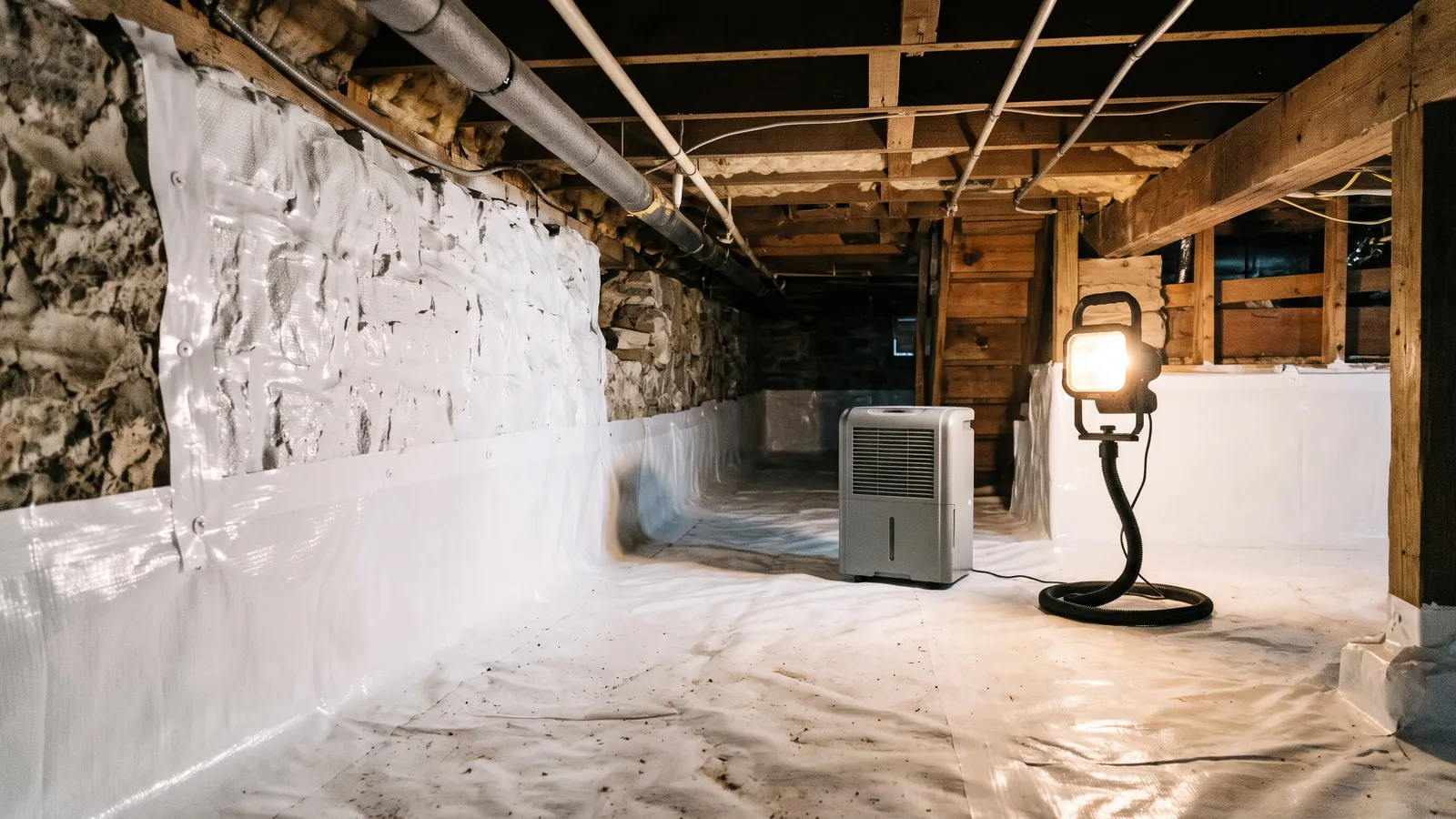
Crawl spaces in this region tend to have bare earth floors, foundation walls of stone or block, and vents that let in humid summer air, which then condenses on the cool soil and wood. Over the years that moisture rots sill plates and joist ends, invites mold, and feeds a musty smell that drifts up into the house. Add the same clay and water pressures that affect basements, and crawl spaces can also take on standing water after heavy rain.
Encapsulation closes the space off from the ground and the outside air:
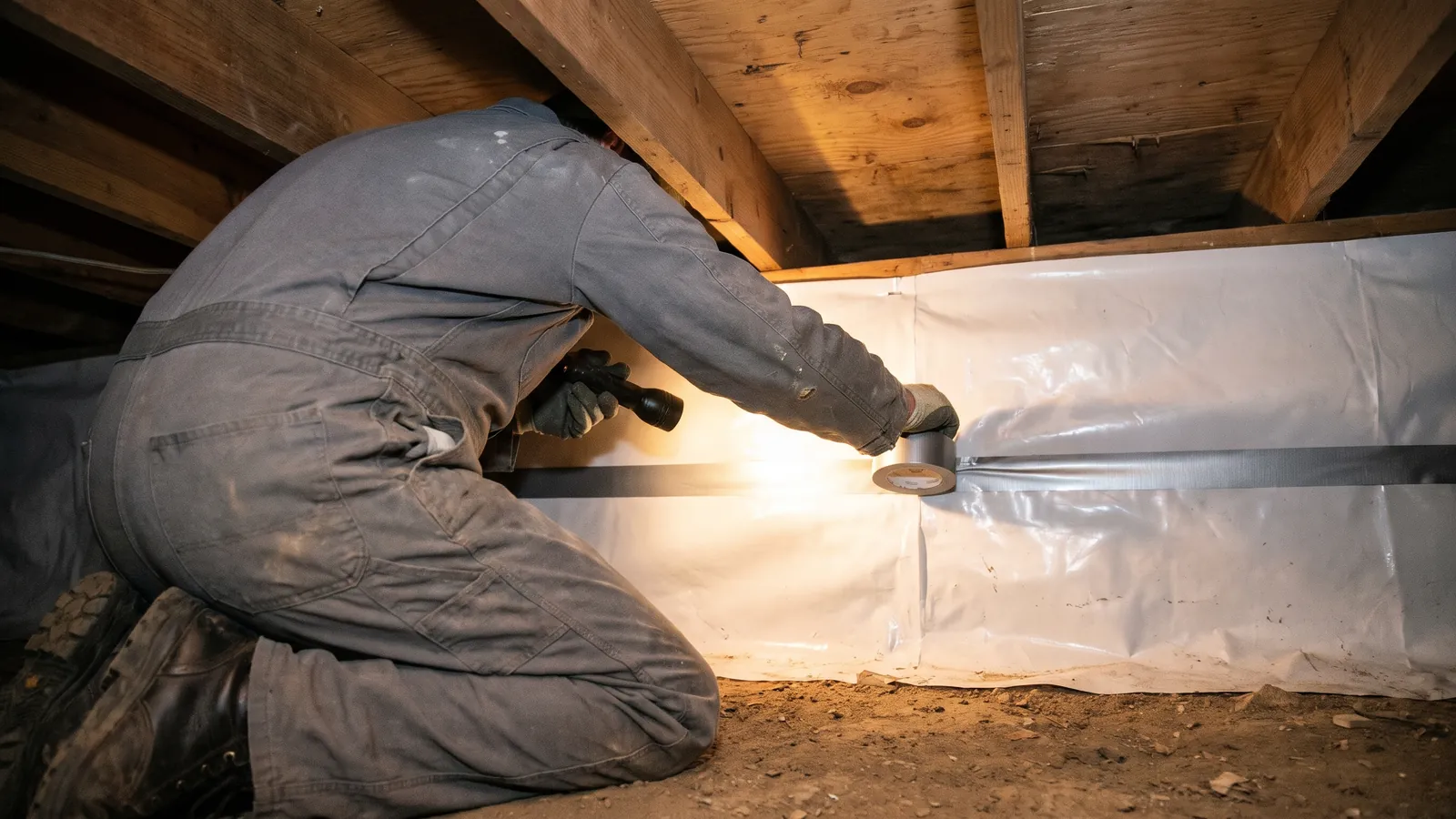
- A heavy, reinforced vapor barrier laid over the floor, run up the walls and piers, with every seam taped and the edges fastened.
- Vents sealed and the access door insulated and weather-stripped.
- A dehumidifier sized for the space, draining to the outside or to a pump.
- Where water collects, a perimeter drain and small sump under the liner.
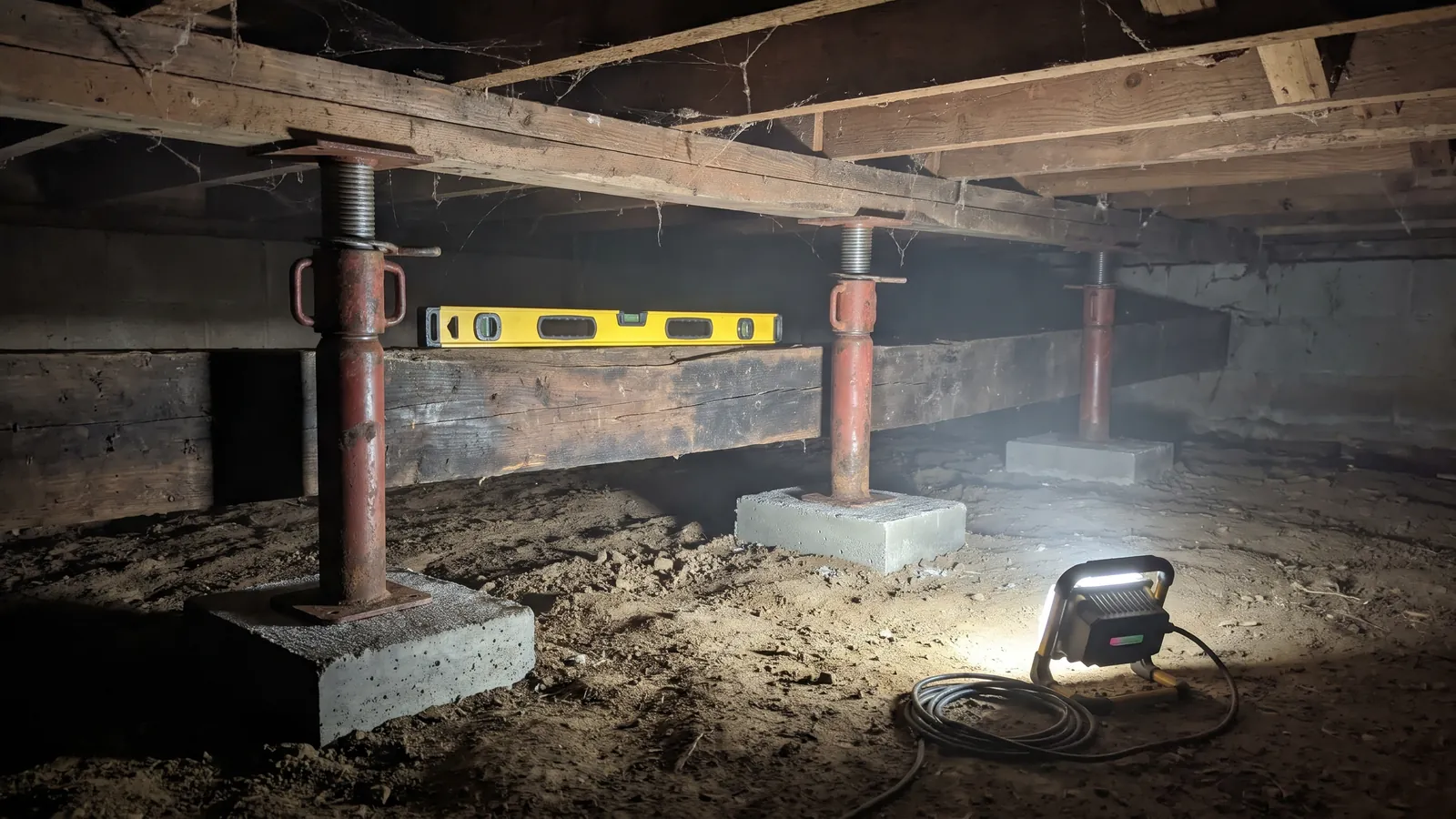
Structural repairs come first when the framing needs them. Floors that bounce or sag usually mean a beam spanning too far, a post that has sunk, or joists weakened by rot. We install adjustable steel support posts on new footings, sister damaged joists, and replace rotted sill sections, then encapsulate so the problem does not return.
What the job includes
Moisture source found
Ground moisture, outside air, a plumbing leak or water running in from outside.
Heavy vapor barrier
Reinforced liner over the floor and up the walls, every seam taped.
Vents and door sealed
The space closed off from humid outside air.
Dehumidifier
Sized for the space and drained so you never empty a bucket.
Support where needed
Steel posts on new footings under sagging beams, sistered joists, rot repaired.
Drain under the liner
Perimeter drain and small sump when water collects after storms.
Crawl space repair cost in Pittsburgh
| Job | Typical range | What moves it |
|---|---|---|
| Vapor barrier on floor only | $2,000 – $4,500 | Size and access |
| Full encapsulation with dehumidifier | $6,000 – $14,000 | Size, wall height and drainage |
| Support post on new footing (each) | $450 – $850 | Height and soil |
| Sistering joists (per joist) | $250 – $600 | Length and access |
| Crawl space drain and sump | $2,500 – $5,500 | Length and pump |
Typical 2026 ranges for Pittsburgh-area houses, to help you plan. Your price comes after the free inspection, itemized and in writing, and the work starts only when you agree to it.
On the job
Questions about crawl space repair
Is encapsulation worth it?
In a crawl space with damp soil and open vents, usually yes: it protects the framing, cuts musty smells upstairs and makes floors above it noticeably warmer in winter.
Should crawl space vents be open or closed?
In our climate, sealed. Open vents let humid summer air in, where it condenses on cool surfaces. A sealed, dehumidified space stays drier.
My floors bounce. Is that the foundation?
Usually the framing: a beam spanning too far, a sunken post or damaged joists. It is a cheaper fix than foundation work, and we check it during the inspection.
Can you work in a very low crawl space?
Most of the time, yes. Very tight spaces cost a bit more and take longer, and we tell you up front.
Will it help with mold?
It removes the moisture mold needs. Existing mold on the framing should be treated before the space is sealed, and we will tell you if it needs a specialist.
How long does it take?
Most crawl spaces are encapsulated in one to three days. Structural work adds time depending on what we find.