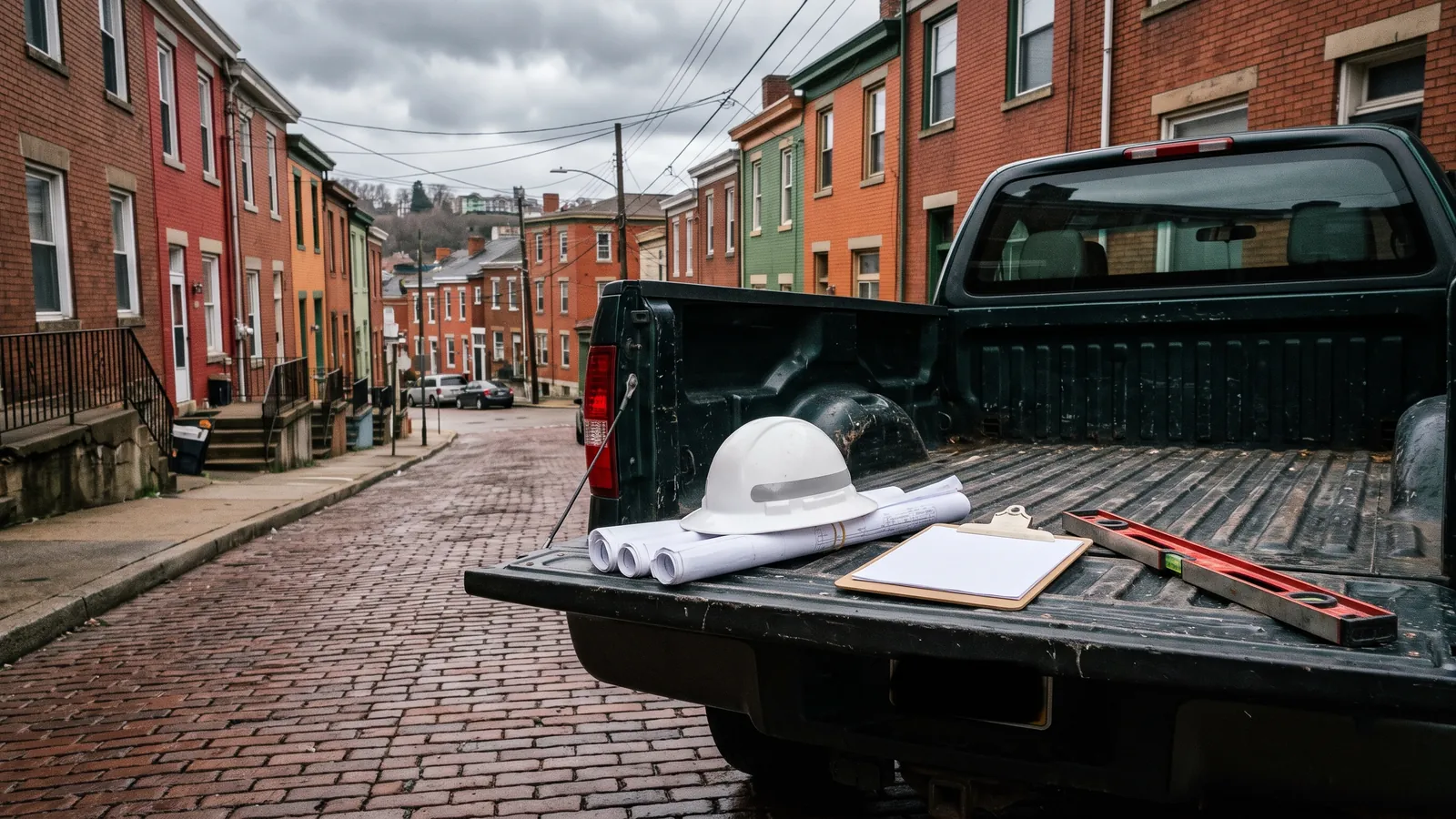
Inside the city of Pittsburgh
Building permits in the city are handled by the Department of Permits, Licenses, and Inspections (PLI), and applications go through the city's online portal, OneStopPGH. Structural foundation work, such as installing piers, rebuilding a section of wall or underpinning, generally needs a permit and inspection. PLI is the place to confirm requirements for any specific job.
The city also licenses general contractors who work under commercial building permits. That license is issued by PLI, costs about $90 and lasts one year. For residential work, the state registration below is the key requirement.
Outside the city
Allegheny County is made up of many boroughs and townships, and most run their own building permit offices or contract the work out. Mt. Lebanon, Bethel Park, Penn Hills, Ross, Shaler and the others each set their own process and fees. Cranberry Township is in Butler County, and Murrysville is in Westmoreland County, with their own offices too. We check with the right office before work starts.
Jobs that usually need a permit
| Work | Permit usually needed? | Notes |
|---|---|---|
| Helical or push piers | Yes | Structural; may need an engineer's plan |
| Rebuilding a foundation wall | Yes | Structural; excavation involved |
| Wall anchors or steel beams | Often | Varies by municipality |
| Exterior excavation and membrane | Sometimes | Depends on depth and location |
| Crack injection | Usually not | Repair from inside |
| Interior drain and sump pump | Usually not | Discharge location may have rules |
Contractor registration: HICPA
Pennsylvania does not have a statewide general contractor license. Instead, the Home Improvement Consumer Protection Act (HICPA) requires contractors doing residential home improvement work worth more than $500 to register with the Pennsylvania Attorney General. HICPA also sets rules for written home improvement contracts. Ask any contractor for their registration before you sign.
Older homes and lead paint
Many Pittsburgh houses were built before 1978. Contractors disturbing painted surfaces in those homes need EPA Lead RRP certification and must follow lead-safe work practices. That matters for foundation work that involves cutting into finished basements or painted walls.
Separate trades
Electrical, plumbing and mechanical work have their own licensing and permits. If a job needs a new outlet for a sump pump or changes to a drain line, those parts are handled by the appropriate licensed trade.
Questions people ask
Who pulls the permit, me or the contractor?
Normally the contractor, and the cost appears on the estimate. Make sure the permit is in place before structural work starts.
How do I check a contractor's HICPA registration?
The Pennsylvania Attorney General's office maintains the registration. Ask the contractor for their registration number and check it.
Does a sump pump need a permit?
A replacement usually does not. Some municipalities regulate where the discharge can go, and it must never go into the sanitary sewer.
What if work was done without a permit?
It can come up when you sell. A municipality may require a permit after the fact and an inspection, which can mean opening up finished work.
Keep reading: Foundation repair cost · Pier installation · Free structural inspection