What foundation repair costs in Pittsburgh
The honest answer is a range, because a hairline leak and a sinking corner are very different jobs. Here are the ranges we see in Pittsburgh-area houses, and what moves a job from one end to the other.
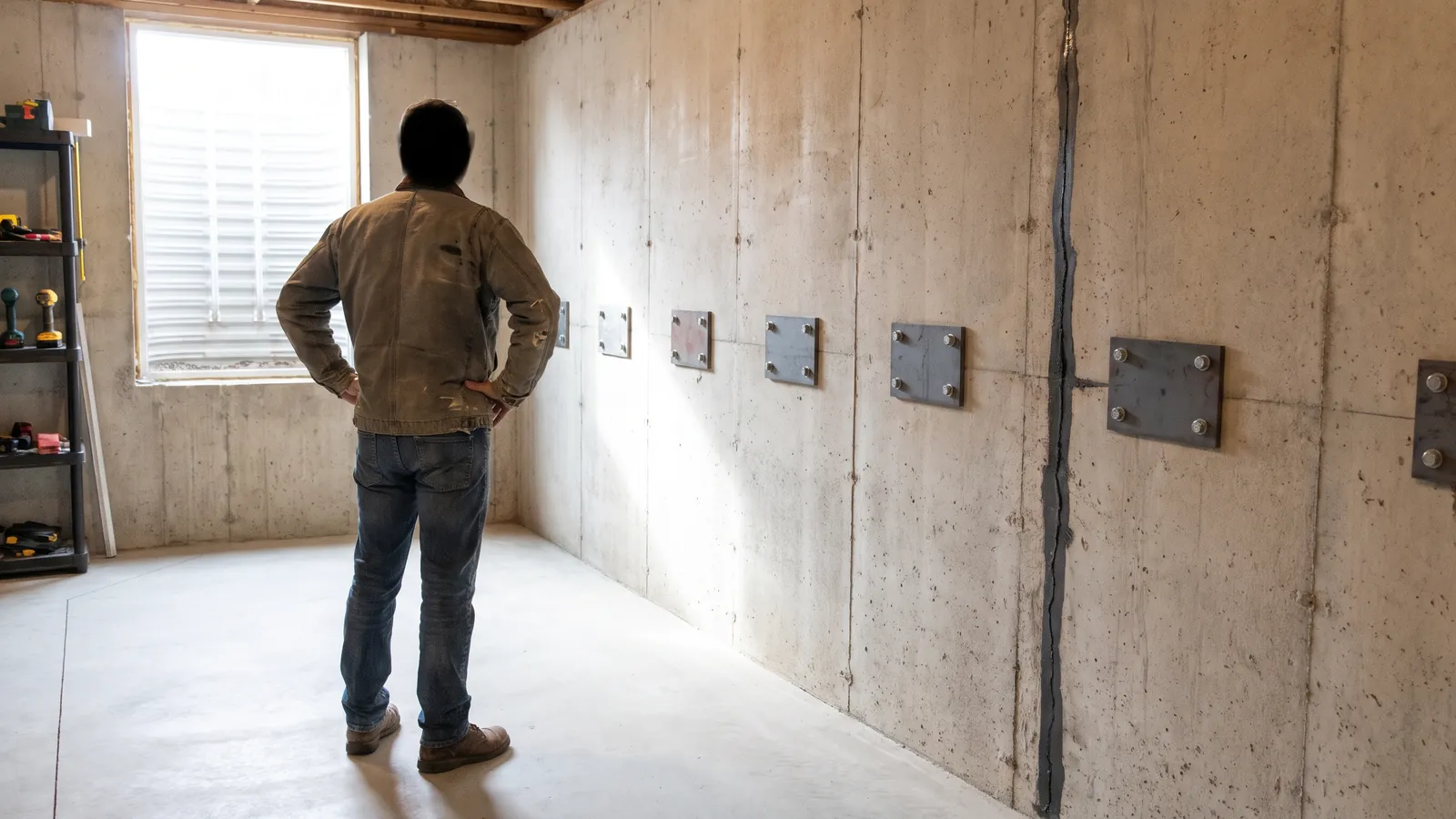
Foundation repair prices vary more than most home repairs because the work depends on what is happening underground. Two houses on the same street can have the same-looking crack and need completely different fixes. That is why every price we give starts with a free inspection. These ranges are for planning, so you know roughly where you stand before anyone visits.
Typical 2026 ranges
| Repair | Typical range | Main price factors |
|---|---|---|
| Foundation inspection | Free | Written report $250 – $450 if you need one |
| Crack injection, one crack | $450 – $1,100 | Polyurethane or epoxy, length and wall |
| Repointing stone or block | $900 – $2,800 | Area and mortar condition |
| Carbon fiber straps, one wall | $3,500 – $6,500 | Wall length, usually one strap every 4 ft |
| Wall anchors, one wall | $4,500 – $9,000 | Number of anchors and yard access |
| Steel I-beam braces, one wall | $3,000 – $6,500 | Height and number of beams |
| Piers, per pier | $1,500 – $3,200 | Helical or push, depth to firm bearing |
| Corner settling repair (3–4 piers) | $5,500 – $12,000 | Excavation, lift and backfill |
| Wall section rebuild | $12,000 – $30,000+ | Length, depth, access |
For comparison, HomeAdvisor puts the national average for foundation repair around $7,500. Many Pittsburgh jobs land near that, but small crack repairs come in far below it and whole-wall rebuilds far above.
What pushes the price up
- Depth to firm ground. Piers are priced partly by how far down they go. Hillside lots built on fill can need much deeper piers than lots on undisturbed soil.
- Access. Row houses with a wall against the neighbor, porches over the problem corner, steep yards and finished basements all add time.
- How far it has moved. A wall bowed an inch can take straps; one bowed four inches may need anchors or rebuilding.
- Water. If water caused the problem, fixing it is part of the job. Bracing a wall without changing the drainage just postpones the next repair.
- Permits. Structural work usually needs one. Pittsburgh's Department of Permits, Licenses, and Inspections and the surrounding boroughs and townships each set their own fees, which appear on their own line of the estimate.
What keeps it down
- Catching it early. A crack sealed now or a wall braced at one inch of movement costs a fraction of a rebuild.
- Doing the cheap fixes first. Downspout extensions and regrading sometimes stop the movement on their own.
- Combining work. Bracing and an interior drain on the same wall, done in one visit, saves on setup and concrete work.
Reading an estimate
A good foundation estimate names the cause, the method, the quantity (how many piers, straps or feet of drain), the permit if one is needed, cleanup and backfill, and any warranty terms. If two estimates differ by a lot, compare those lines: one may be bracing a wall that the other plans to rebuild, or one may have left out the drainage.
Questions people ask
Why do foundation repair quotes vary so much?
Because companies may be solving different problems. One might seal a crack, another brace the wall behind it, and a third rebuild it. Ask each one what they think caused the damage and why their method fits.
Is foundation repair worth it on an older house?
Almost always. Stabilizing a foundation usually costs far less than the value it protects, and an unrepaired structural problem makes a house hard to sell.
Can I spread the cost out?
Yes. Safety items like a moving wall come first; drainage and cosmetic work can follow. Financing is also available for larger jobs. See financing.
Does a permit add a lot?
Usually a modest amount compared with the job itself. The fee is set by the city or your municipality and shown on its own line.
Keep reading: Basement waterproofing cost · Foundation warning signs · Pier installation